


Backflip Madness
4.51.97K Reviews
App Specs
- Version
- 1.3.4
- Updated On
- License
- $0.39
- Downloads
- 500,000+
- Developer
- Gamesoul Studio
- Categories
- Sports
- Platform
- Android, iOS
Screenshots
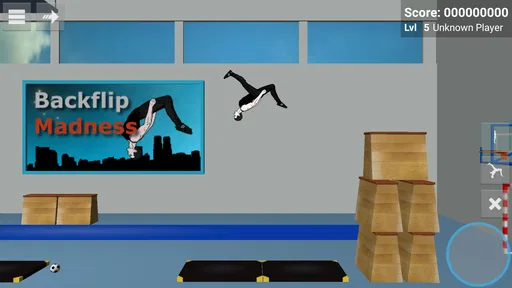
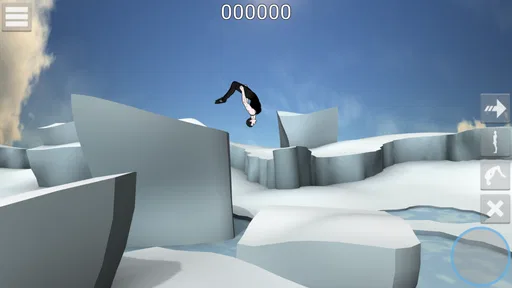
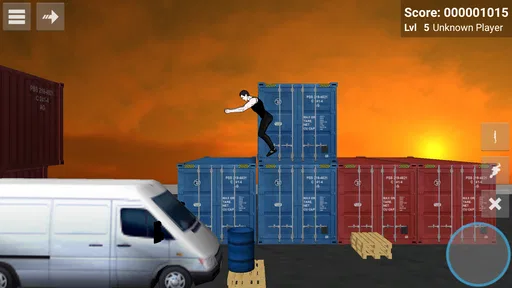
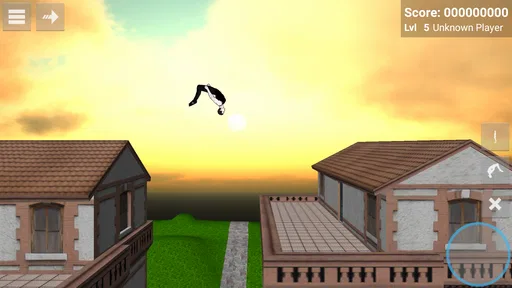
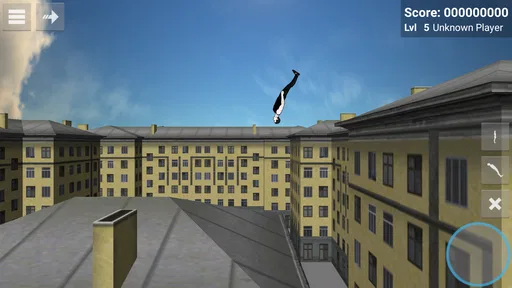
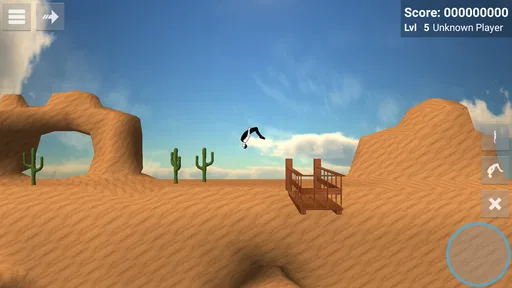
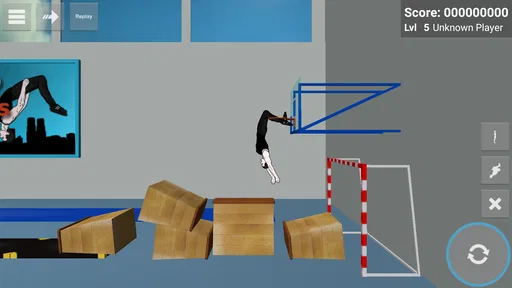
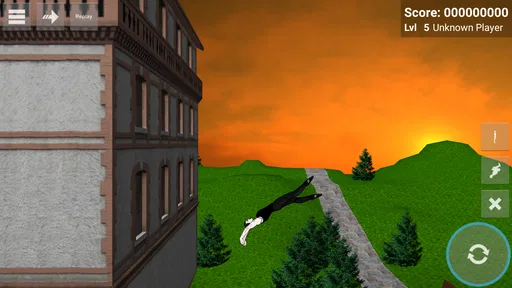
 Analysis by AppCompare
I went into Backflip Madness expecting a small, quick sports game, and that is exactly where it makes the most sense. It is built around performing backflips in a parkour-inspired setting, with the appeal coming from timing, repetition, and the satisfying feeling of finally landing a move that looked impossible a moment earlier. It is not trying to be a full sports simulation or a long story-driven adventure. I see it as a compact challenge game for short sessions, especially when I want something that starts quickly and gives me a clear reason to try one more attempt.
Gamesoul Studio has kept the idea focused. Rather than burying the central action under menus or a large collection of unrelated activities, the experience revolves around controlling aerial movement and learning how to recover from mistakes. That narrow focus is both its strongest quality and its biggest limitation. If you enjoy practicing a precise action until your hands understand the timing, this game can be surprisingly absorbing. If you need constant variety, realistic sports rules, or a substantial progression system, its simple approach may feel thin.
The game belongs to the sports category, although its tone is closer to an arcade stunt challenge than to a traditional match-based sports title. It costs $0.39, carries a Teen content rating, and supports devices running Android 5.0 or later. Its current version is 1.3.4. Those details make it relatively easy to consider as a low-cost experiment, but the real question is not whether it is expensive; it is whether repeated attempts at acrobatic timing fit the way you like to play.
How the movement feels when the action speeds up
The first thing I noticed was that the game creates a strong impression of speed without needing a complicated structure. A jump begins, the character rotates, and I have only a short window to judge whether the landing is going to work. That makes each attempt feel more urgent than the basic premise might suggest. The controls are not difficult to understand, but understanding them is very different from using them consistently. My early failures came less from not knowing what to do and more from reacting too late.
This is where the parkour influence matters. The game is not simply asking me to press a button and watch a trick happen. It encourages attention to momentum, timing, and the point at which I should stop trying to rotate and concentrate on landing. The best runs feel deliberate rather than random. When I began treating each attempt as a small timing exercise instead of a frantic tap, my results became much more reliable.
I would not describe the pace as constantly frantic. There is a useful rhythm between setup, launch, rotation, and recovery. The perceived speed rises during the airborne portion, because the consequences of a mistimed action arrive quickly. That makes the game suitable for a short break: I can play for a few minutes, focus on a handful of attempts, and stop without feeling as though I abandoned a large campaign.
At the same time, the speed can expose the limits of the format. A player who prefers generous reaction windows may find the experience unforgiving. The game asks for repeated practice rather than offering a relaxed introduction that stays comfortable forever. I think that is intentional, but it means the opening impression depends heavily on whether failed landings feel motivating or annoying to you.
Worth Reading Before You Choose

EA SPORTS FC Mobile 26 Is a Bigger Football Game, but It Takes Time

Flipboard Shows What News Apps Must Do Beyond the Feed

Switching to Android Auto Means Rethinking Your Driving Routine

Google Calendar Makes a Crowded Week Easier to Manage

Ludo King Makes the Most of the Minutes Between Plans

Baby Panda World Brings Quick Play to Modern Phones, but Its Game Library Feels Busy
Why recovery matters more than a flashy first attempt
The most useful lesson I took from playing was that recovery deserves as much attention as the flip itself. It is tempting to focus only on starting the move, because that is the visually exciting part. In practice, a good attempt is defined by what happens near the end. I found it more productive to watch the character’s position as the rotation developed and adjust my timing around the landing rather than trying to force a dramatic-looking motion every time.
That creates an interesting trade-off. A safer attempt may feel less impressive, but it teaches me more about the game’s timing. A reckless attempt can occasionally produce a satisfying result, yet it also makes it harder to understand why I succeeded or failed. For anyone learning the controls, I recommend repeating a manageable movement until the landing feels predictable before chasing more ambitious combinations.
This approach also makes the game more approachable for casual players. You do not need to be interested in real-world gymnastics to understand the goal. You only need patience and a willingness to observe what happened during the previous attempt. The game rewards a player who can turn a failed landing into a small adjustment instead of immediately blaming the controls.
What a heavy-use session feels like
During a longer session, the main pressure is not the amount of content on screen but the concentration required to repeat the same basic challenge. A few attempts can feel light and playful. Many attempts in a row demand more attention, particularly when I start rushing because I want to correct a mistake immediately. That is when errors tend to multiply: a late reaction leads to another late reaction, and the session becomes less about learning than about chasing the previous failure.
I get better results by using short practice blocks. I play until I notice that I am reacting automatically or tapping without thinking, then I pause. This is a practical way to use the game on an everyday schedule, such as during a commute break or while waiting for an appointment. The low-cost, compact nature suits that pattern better than a game that expects a long uninterrupted session.
For heavier use, I also pay attention to how the device feels in my hand. Repeated attempts encourage frequent touches and quick corrections, so a phone that is awkward to hold can make the experience seem harder than it really is. A stable grip helps me distinguish a genuine timing mistake from an accidental input. That is a small point, but it matters in a game where a tiny difference can decide whether the character lands or falls.
The game’s simplicity is helpful here because there is less surrounding activity competing for attention. I am not constantly checking equipment, managing a team, or reading long instructions. The trade-off is that the central challenge has to carry the entire session. Once I have had enough of practicing the same kind of stunt, there may be little reason to continue immediately. I prefer returning later with fresh concentration rather than forcing a marathon session.
Reliability, responsiveness, and the limits of a focused design
My impression of the experience is that its reliability depends as much on the player’s consistency as on the device. When an attempt fails, the result feels connected to timing rather than to a complicated chain of systems. That clarity is valuable: I usually know what I am trying to improve. It also makes mistakes more noticeable, because there are fewer distractions to hide behind.
That does not mean every failed attempt feels equally satisfying. Arcade movement can be demanding when the visual information arrives quickly, and a new player may need time to understand the relationship between an input and the character’s position in the air. I would not recommend judging the game after only a few unsuccessful tries. The learning curve is part of the product, and the game makes more sense once I stop expecting immediate control.
One of its quiet strengths is that it encourages self-correction. Instead of simply repeating the exact same action, I can change one part of my timing and see whether the landing improves. That makes the experience useful for players who enjoy mastering compact mechanics. It is less useful for someone who wants a reliable win every time or who considers failure a sign that a game is being unfair.
The current version, 1.3.4, is the version I would look for when deciding whether to install it. I would also keep the device’s operating system in mind, since Android 5.0 is the minimum requirement. On a compatible phone, the focused design should be less demanding than a large modern sports game, but I still would not assume that every older device will feel identical. Screen responsiveness, grip, and general device condition can influence a timing-based game more noticeably than they influence a turn-based title.
Where it fits among other sports games
Compared with a conventional football, basketball, racing, or tennis game, this is much narrower. Those alternatives usually offer matches, opponents, statistics, team decisions, or a wider sense of progression. Backflip Madness instead gives me a stunt-focused loop. I choose it when I want direct control and quick repetition, not when I want to manage a season or recreate a real sporting event.
It also differs from endless runners. Both can be played in short bursts, but an endless runner often emphasizes continuous forward movement and obstacle avoidance. Here, the attention is concentrated on the quality of a jump and the timing of the landing. That makes the game feel more like a practice challenge than a race against distance.
Against physics-based stunt games, its advantage is focus. I do not need to learn a large collection of systems before I can attempt the central action. The disadvantage is equally clear: a broader physics sandbox may offer more experimentation and more ways to create surprising outcomes. If I want to build elaborate stunt setups or explore a large environment, another game will probably keep me interested longer.
Its audience numbers suggest that the concept has found a substantial group of players, with an average rating of 4.5 from around 27 thousand ratings and more than 500 thousand installs. I treat that as useful context rather than a guarantee. A well-liked compact game can still be the wrong fit for someone who dislikes repetition, and a demanding game can still be exactly right for someone who enjoys mastering a small set of actions.
Device constraints and practical expectations
The Android 5.0 minimum makes the game accessible to a broad range of compatible phones, which suits its modest, focused identity. Still, compatibility is not the same as identical comfort. On a smaller screen, I would pay attention to whether my fingers cover important visual areas. On an older phone, I would avoid running unnecessary background tasks during play, simply because timing-based input benefits from a responsive device.
I would not choose this game as a test of high-end graphics or advanced hardware. Its appeal is the interaction, not a large visual spectacle. That is good news for someone looking for a small sports game that does not demand the same commitment as a major modern release. It also means that players shopping specifically for detailed presentation may be disappointed even if the controls suit them.
Battery expectations should be approached sensibly. Short sessions are the natural use case, and I would not keep the game open for hours just to grind attempts. The more important resource is attention. If the phone is warm, uncomfortable, or distracting me with other tasks, my timing becomes less dependable. In this particular game, stopping for a moment can improve performance more than stubbornly continuing.
The price of $0.39 lowers the barrier to trying it, but it does not change the design’s basic trade-off. A low price is worthwhile if I enjoy the central loop; it is not a substitute for variety. I would recommend treating the purchase as a small arcade-style experiment rather than expecting the breadth of a full-priced sports package.
Who should play it and who should skip it
I think it is a good match for players who like skill-based mobile games, quick retries, and the feeling of turning an awkward movement into a controlled one. It also works for people who want a sports-themed game that can be picked up without organizing a team, learning a league, or committing to a long match. The Teen rating is worth noting for families choosing games, even though the central appeal is the stunt action rather than a realistic sports simulation.
I would be more cautious recommending it to someone who wants a relaxing game with forgiving controls. The repeated failures are part of the experience, and a player who does not enjoy practicing may run out of patience quickly. I would also point fans of management games, realistic competitions, and large progression systems toward a different sports title. This one is intentionally too focused for those expectations.
A realistic everyday scenario would be a five-minute break between tasks. I can launch the game, attempt a few flips, notice one timing mistake, and put it down without needing to remember a complicated objective. Another good use is a short practice session when I want something interactive but do not want to start a long game. The less suitable scenario is a planned evening of varied entertainment, because the central mechanic may begin to feel repetitive before that time is over.
My most practical tip is to separate experimentation from score chasing. First, use a few attempts to observe how the character moves and where the landing starts to go wrong. Then repeat the same approach with one small timing change. This makes progress easier to recognize. I also recommend avoiding frantic corrections: once I started making inputs out of panic, I learned less from each failure.
My performance verdict after living with the loop
Backflip Madness works because it understands its own scale. It is a compact sports arcade game built around speed, timing, and recovery, not a complete athletic simulator. The action feels immediate, and the short-session structure is convenient. Gamesoul Studio has chosen a simple idea and made repetition the source of depth, which is a sensible choice for mobile play.
Its weaknesses come from the same decision. The experience can feel narrow, especially for players who expect varied events or a long-term career. The controls may also demand more patience than the short description suggests. I would not call that a flaw for the intended audience, but it is a genuine warning for anyone who prefers instant mastery.
With a 4.5 average and around 2 thousand written reviews, it has clearly attracted positive attention, but I would still make the decision based on your taste in games. The small price and Android 5.0 support make trying it straightforward, while the Teen rating gives parents a useful age guideline. I see it as best for focused practice in brief sessions rather than as a replacement for a full sports game.
My final recommendation is positive, with a clear condition: choose it if the idea of repeating a backflip until the timing clicks sounds satisfying. I enjoy the directness, the quick restarts, and the way a successful landing feels earned rather than automatic. If you want realism, deep progression, or a wide selection of sports, look elsewhere. For a player who wants a small, fast-moving challenge and is willing to learn through failed attempts, Backflip Madness remains an easy game to pick up and a surprisingly demanding one to master.
Pros
- Simple controls make flips easy to learn
- Runs smoothly on many older Android devices
- Quick rounds are ideal for short gaming sessions
- Multiple locations add variety to the stunts
- Leaderboards encourage replaying for higher scores
Cons
- Physics can feel unpredictable during difficult landings
- The free version may include frequent advertisements
- Some advanced tricks require considerable practice
- Visuals are basic compared with newer sports games
- Progression can feel repetitive after extended play
FAQs for Backflip Madness
What is Backflip Madness?
Backflip Madness is an arcade-style sports game focused on performing flips, jumps, and stunt combinations with a highly flexible character. The gameplay is built around timing, momentum, and landing accurately rather than realistic competition. You can practice different acrobatic moves, explore several environments, and try to achieve higher scores by linking tricks together without crashing.
How do you play Backflip Madness?
The controls are relatively simple, but mastering them requires practice. You generally use touch controls to control the character’s movement, initiate flips, and influence rotation while airborne. The key is learning when to jump and how long to hold each action. Successful landings depend on timing, body position, and understanding how much momentum each stunt creates.
Can Backflip Madness be played offline?
Backflip Madness is primarily designed as a self-contained arcade experience, so many of its core features can be enjoyed without a constant internet connection. Offline availability can vary depending on the version, device, and any external services connected to the game. It is still advisable to launch it once while online so the app can complete setup and verify available content.
Is Backflip Madness free to download?
The availability and pricing of Backflip Madness may differ between the Google Play Store and Apple App Store, as well as by region and device. Some versions may be offered as a paid download, while others can include advertising or optional purchases. Before installing, check the store listing carefully for the current price, in-app purchase details, and supported operating-system requirements.
Is Backflip Madness suitable for children and casual players?
Backflip Madness is easy to understand and can be entertaining for casual players, especially those who enjoy short stunt-based sessions. However, its physics and timing can feel challenging at first, and repeated failed landings may require patience. Parents should review the current store rating, advertising information, and purchase settings before allowing younger children to play.


